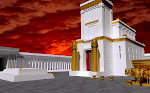
St. Irenaeus Against Heresies and the warning against the Antichrist

St. Irenaeus Against Heresies and the warning against the Antichrist
click on picture

RIGHT TO LIFE ALWAYS THE TRUTH OF GOD

RIGHT TO LIFE ALWAYS THE TRUTH OF GOD

click on picture

Always pray for the deliverance of the little ones

Over Population Myth Genocide is from The devil a murderer from the beginning – liar, father of lies

La plus belle nuit du monde

GLORIA IN PATRI ET IN FILII ET IN SPIRITU SANCTE

MOST BLESSED GLORIOUS ETERNAL HOLY TRINITY ADORABLE UNITY IN

THE GLORY OF YOUR MAJESTY IN THE SPLENDOUR OF YOUR POWER

EXALTED UNTO THE AGES OF AGES

KYRIE ELIESON

KYRIE ELIESON

KYRIE ELIESON

KYRIE CHRISTE JESU SOTER UNICE ELIESON

KYRIE CHRISTE JESU SOTER UNICE ELIESON

KYRIE CHRISTE JESU SOTER UNICE ELIESON

KYRIE ELIESON

KYRIE ELIESON

KYRIE ELIESON

HOLY HOLY HOLY LORD GOD PANTOCRATOR

WHO IS AND WAS AND IS TO COME

ELIESON

GLORIA IN EXCELSIS DEO

Doxology and Kyrie

__________________________

Evening Hymn

O Christ Jesus, radiant light of the immortal glory of the Father of heaven! As the sun sinks to its setting we are face to face with the twilight of evening: we honour God, Father, Son and Holy Spirit. You are worthy ever to be hymned by voices that are pure, Son of God who gives us life. The universe proclaims your glory.

Athenegoras, Christian martyr, at the lighting of the lamps

Traditional Christian Catholic Orthodox Sites in the Great Battle

Our Lord and Saviour Jesus Christ said

Our Lord and Saviour Jesus Christ said
Matthew 11:28 Come to Me, all you who labor and are heavy burdened, and I will give you rest. (click on picture)

Main Blog List

Parousia of Jesus Christ Our Lord

Parousia of Jesus Christ Our Lord

Apostasy


The Return of Christ


Parousia of Jesus Christ Our Lord

The Promise of His coming. His commands to prepare and be worthy.

Statement of what is happening in the world in connection with the Second Coming of Our Lord and Saviour Jesus Christ.

Nuzul i Isa - Qiyamah, the Parousia of Jesus Christ Our Lord.

Rv:22:7 Behold I come quickly. Blessed is he that keepeth the words of the prophecy of this book.
Showing posts with label Christian. Show all posts

Thursday, November 17, 2011

The teaching of Jesus Christ


Holy Qur'an

Surah 2 - Al Baqarah THE HEIFER

Ayah
002.136 Say ye: "We believe in God, and the revelation given to us, and to Abraham, Isma'il, Isaac, Jacob, and the Tribes, and that given to Moses and Jesus, and that given to Prophets from their Lord: We make no difference between one and another of them: And we bow to God."

002.137 So if they believe as ye believe, they are indeed on the right path; but if they turn back, it is they who are in schism; but God will suffice thee as against them, and He is the All-Hearing, the All-Knowing.

002.138 The Baptism of God: And who can baptize better than God? And it is He Whom we worship.

002.139 Say: Will ye dispute with us about God, seeing that He is our Lord and your Lord; that we are responsible for our doings and ye for yours; and that We are sincere in Him?

We make no difference between the prophets of God, but 'Isa al-Maseeh (Jesus Christ) is the only Messiah in Islam as he is in Christian profession of faith in God. He is not relegated to only the status of a prophet, but as he himself said, he is a prophet and is the prophet that Moses prophesied would come and be rejected by the Jews.

Moses said -

Deuteronomy 18:15
The Lord thy God will raise up to thee a prophet of thy nation and of thy brethren like unto me: him thou shalt hear:

[17] And the Lord said to me: They have spoken all things well. [18] I will raise them up a prophet out of the midst of their brethren like to thee [Moses]: and I will put my words in his mouth, and he shall speak to them all that I shall command him. [19] And he that will not hear his words, which he shall speak in my name, I will be the revenger.

"And he that will not hear his words, which he shall speak in my name,"

[in all these verses Jesus Christ is that prophet that will be rejected by the Jews and God will revenge the rejection of the Christ by those apostates who rejected him. That came to pass with the destruction of Jerusalem by Titus in 70 A.D..]

Jesus Christ said -

Matthew 13:57
And they were scandalized in his regard. But
Jesus said to them: A prophet is not without honour, save in his own country, and in his own house.

John 4:44
For Jesus himself gave testimony that a prophet hath no honour in his own country. [which testified that he was the prophet that Moses prophesied would be rejected by his and Moses own household, that is only Jesus.]

Matthew 28:19
Going therefore, teach ye all nations; baptizing them in the name of the Father, and of the Son, and of the Holy Spirit.

John 7:28
Jesus therefore cried out in the temple, teaching, and saying: You both know me, and you know whence I am: and I am not come of myself; but he that sent me, is true, whom you know not.

Luke 10:16
He that heareth you, heareth me; and he that despiseth you, despiseth me; and he that despiseth me, despiseth him that sent me.

Matthew 10:40
He that receiveth you, receiveth me: and he that receiveth me, receiveth him that sent me.

John 14:24
He that loveth me not, keepeth not my words. And the word which you have heard, is not mine; but the Father's who sent me.


The leader of the apostles that Christ taught while on earth, Peter, said -

The Catholic Creed: Baptism into Christ Jesus


1 Peter 3:
In Christian Suffering13. And who is there to harm you, if you are zealous for what is good? 14. But even if you suffer anything for justice’ sake, blessed are you. So have no fear of their fear and do not be troubled. 15. But hallow the Lord Christ in your hearts. Be ready always with an answer to everyone who asks a reason for the hope that is in you. 16. Yet do so with gentleness and fear, having a good conscience, so that wherein they speak in disparagement of you they who revile your good behavior in Christ may be put to shame. 17. For it is better, if the will of God should so will, that you suffer for doing good than for doing evil. 18. Because Christ also died once for sins, the Just for the unjust, that he might bring us to God. Put to death indeed in the flesh, he was brought to life in the spirit, 19. in which also he went and preached to those spirits that were in prison. 20. These in times past had been disobedient when the patience of God waited in the days of Noe [Noah] while the ark was building. In that ark a few, that is, eight souls were saved through water. 21. Its counterpart, Baptism now saves you also (not the putting off of the filth of the flesh [the water is referred to], but the inquiry [response] of a good conscience after God), through the resurrection of Jesus Christ; 22. who is at the right hand of God, swallowing up death that we might be made heirs of eternal life; for he went into heaven, Angels, Powers and Virtues being made subject to him.

Holy Qur'an

Surah 3 - Ali 'Imran - THE FAMILY OF 'IMRAN

Ayat 003:055
And God said: Oh Jesus! I am causing you to die, and lifting you up to Me, and cleansing you of those who blasphemed, and making those who follow you above those who blasphemed, until the Day of Resurrection when to Me shall all of you return. Then I will judge between you on the strained points of matters upon which the whole unreasoning had disputed.


Real baptism in Jesus Christ, the only Messiah of Allah (SWT) is in the Holy Spirit. Only those who believe in their hearts and follow in their works, publicly professing God and His Christ are truly believers and loved by God unto salvation. This applies to all people and especially Muslims and Christians. Unless you are persecuted somewhere, somehow, (Christians, pick up your cross, Mt. 16:34. Muslims, the example of the prophet (pbuh), 006.035) are you even really a believer?


Matthew 16:24
Then Jesus said to his disciples: If any man will come after me, let him deny himself, and take up his cross, and follow me.

Surah 6
Ayat 006.035 If their spurning is hard on thy mind, yet if thou wert able to seek a tunnel in the ground or a ladder to the skies and bring them a sign,- (what good?). If it were God's will, He could gather them together unto true guidance: so be not thou amongst those who are swayed by ignorance (and impatience)!

Christ's baptism with water by John the Baptist

Matthew 3:16 found 1
And Jesus being baptized, forthwith came out of the water: and lo, the heavens were opened to him: and he saw the Spirit of God descending as a dove, and coming upon him. [The Spirit of God was always with him. But this manifestation was for a public witness.]

John the Baptist, who is the only one that Jesus allowed to baptize him with water, said -

Matthew 3:11
I indeed baptize you in the water unto penance, but he that shall come after me, is mightier than I, whose shoes I am not worthy to bear; he shall baptize you in the Holy Spirit and fire.

John 1:[20] And he confessed, and did not deny: and he confessed: I am not the Christ.

[21] And they asked him: What then? Art thou Elias? And he said: I am not. Art thou the prophet? And he answered: No. [22] They said therefore unto him: Who art thou, that we may give an answer to them that sent us? What sayest thou of thyself? [23] He said: I am the voice of one crying out in the wilderness, make straight the way of the Lord, as said the prophet Isaias. [24] And they that were sent, were of the Pharisees. [25] And they asked him, and said to him: Why then dost thou baptize, if thou be not Christ, nor Elias, nor the prophet? [26] John answered them, saying: I baptize with water; but there hath stood one in the midst of you, whom you know not. [27] The same is he that shall come after me, who is preferred before me: the latchet of whose shoe I am not worthy to loose. [28] These things were done in Bethania, beyond the Jordan, where John was baptizing. [29] The next day, John saw Jesus coming to him, and he saith: Behold the Lamb of God, behold him who taketh away the sin of the world. [30] This is he, of whom I said: After me there cometh a man, who is preferred before me: because he was before me.

[31] And I knew him not, but that he may be made manifest in Israel, therefore am I come baptizing with water. [32] And John gave testimony, saying: I saw the Spirit coming down, as a dove from heaven, and he remained upon him. [33] And I knew him not; but he who sent me to baptize with water, said to me: He upon whom thou shalt see the Spirit descending, and remaining upon him, he it is that baptizeth with the Holy Spirit. [34] And I saw, and I gave testimony, that this is the Son of God.

The Messiah of God, Allah (SWT), 'Isa al-Maseeh baptizes with the Holy Spirit.

"...if thou be not Christ, nor Elias [Elijah], nor the prophet?"

Jesus is the only Messiah, the Christ, Elijah is Elijah who will return with Enoch (the two witnesses) before Christ at Christ's Parousia, his return at the end of this age.

Christians also observe the baptism of water since Jesus Christ did, we do not criticize that. Athanasius of Egypt, who was responsible for the Nicene Creed at the first Christian council of Nicaea said that if anyone thought that the water itself had any salvific power to save that person would be guilty of the idolatrous belief of Egyptian pagan Hydromancy, a transgression of God's commandments against idol worship and sorcery. We agree with the Christian, Athanasius of Egypt, first primate of the Egyptian Church.


Mt:5:
1 ¶ And seeing the multitudes, he went up into a mountain, and when he was set down, his disciples came unto him.
2 And opening his mouth he taught them, saying:
3 ¶ Blessed are the poor in spirit: for theirs is the kingdom of heaven.
4 Blessed are the meek: for they shall possess the land.
5 Blessed are they that mourn: for they shall be comforted.
6 Blessed are they that hunger and thirst after justice: for they shall have their fill.
7 Blessed are the merciful: for they shall obtain mercy.
8 Blessed are the clean of heart: they shall see God.
9 Blessed are the peacemakers: for they shall be called the children of God.
10 Blessed are they that suffer persecution for justice' sake: for theirs is the kingdom of heaven.
11 Blessed are ye when they shall revile you, and persecute you, and speak all that is evil against you, untruly, for my sake:
12 Be glad and rejoice for your reward is very great in heaven. For so they persecuted the prophets that were before you.
13 ¶ You are the salt of the earth. But if the salt lose its savour, wherewith shall it be salted? It is good for nothing anymore but to be cast out, and to be trodden on by men.
14 You are the light of the world. A city seated on a mountain cannot be hid.
15 Neither do men light a candle and put it under a bushel, but upon a candlestick, that it may shine to all that are in the house.
16 So let your light shine before men, that they may see your good works, and glorify your Father who is in heaven.
17 ¶ Do not think that I am come to destroy the law, or the prophets. I am not come to destroy, but to fulfil.
18 For amen I say unto you, till heaven and earth pass, one jot, or one tittle shall not pass of the law, till all be fulfilled.
19 He therefore that shall break one of these least commandments, and shall so teach men shall be called the least in the kingdom of heaven. But he that shall do and teach, he shall be called great in the kingdom of heaven.
20 For I tell you, that unless your justice abound more than that of the scribes and Pharisees, you shall not enter into the kingdom of heaven.
21 ¶ You have heard that it was said to them of old: Thou shalt not kill. And whosoever shall kill, shall be in danger of the judgment.
22 But I say to you, that whosoever is angry with his brother, shall be in danger of the judgment. And whosoever shall say to his brother, Raca, shall be in danger of the council. And whosoever shall say, Thou fool, shall be in danger of hell fire.
23 If therefore thou offer thy gift at the altar, and there thou remember that thy brother hath anything against thee;
24 Leave there thy offering before the altar, and go first to be reconciled to thy brother, and then coming thou shalt offer thy gift.
25 Be at agreement with thy adversary betimes, whilst thou art in the way with him: lest perhaps the adversary deliver thee to the judge, and the judge deliver thee to the officer, and thou be cast into prison.
26 Amen I say to thee, thou shalt not go out from thence till thou repay the last farthing.
27 ¶ You have heard that it was said to them of old: Thou shalt not commit adultery.
28 But I say to you, that whosoever shall look on a woman to lust after her, hath already committed adultery with her in his heart.
29 And if thy right eye scandalize thee, pluck it out and cast it from thee. For it is expedient for thee that one of thy members should perish, rather than thy whole body be cast into hell.
30 And if thy right hand scandalize thee, cut it off, and cast it from thee: for it is expedient for thee that one of thy members should perish, rather than that thy whole body go into hell.
31 And it hath been said, Whosoever shall put away his wife, let him give her a bill of divorce.
32 But I say to you, that whosoever shall put away his wife, excepting the cause of fornication, maketh her to commit adultery: and he that shall marry her that is put away, committeth adultery.
33 ¶ Again you have heard that it was said to them of old, thou shalt not forswear thyself: but thou shalt perform thy oaths to the Lord.
34 But I say to you not to swear at all, neither by heaven for it is the throne of God:
35 Nor by the earth, for it is his footstool: nor by Jerusalem, for it is the city of the great king:
36 Neither shalt thou swear by thy head, because thou canst not make one hair white or black.
37 But let your speech be yea, yea: no, no: and that which is over and above these, is of evil.
38 ¶ You have heard that it hath been said: An eye for an eye, and a tooth for a tooth.
39 But I say to you not to resist evil: but if one strike thee on thy right cheek, turn to him also the other:
40 And if a man will contend with thee in judgment, and take away thy coat, let go thy cloak also unto him.
41 And whosoever will force thee one mile, go with him other two.
42 Give to him that asketh of thee, and from him that would borrow of thee turn not away.
43 ¶ You have heard that it hath been said, Thou shalt love thy neighbour, and hate thy enemy.
44 But I say to you, Love your enemies: do good to them that hate you: and pray for them that persecute and calumniate you:
45 That you may be the children of your Father who is in heaven, who maketh his sun to rise upon the good, and bad, and raineth upon the just and the unjust.
46 For if you love them that love you, what reward shall you have? do not even the publicans this?
47 And if you salute your brethren only, what do you more? do not also the heathens this?
48 Be you therefore perfect, as also your heavenly Father is perfect.
(DRV)


The Catholic Creed: It is a profound teaching of Catholicism

Let us make this clear before venturing onto the below. All men are called to salvation in Christ, Jew and Gentile alike.
It is a profound teaching of Catholicism that Jesus Christ took upon Himself flesh of ALL men from Adam on - subsumed from the Blessed Virgin Mary (see the genealogies of Christ from the Gospel of St. Matthew Chapter 1 and the Gospel of St. Luke Chapter 3). Therefore He is equally the Saviour of all men regardless of race or ethnicity. In contrast to this sublime truth is the lie that a particular race is the salvific hope of mankind and ultimately that a given individual of that particular race is a man-god and that race alone is human, such as the so-called Aryan Nazis and Hitler or 'the form of the elect of the nations' of Dr. Klausner and a "natural messiah" for them only and from them only see below:
From:
The Point

Edited Under Fr. Leonard Feeney M.I.C.M. — Saint Benedict Center
June, 1957

THE REJECTED PEOPLE OF HOLY SCRIPTURE

Why the Jews Fear the Bible

Why The Jews Fear The Bible (June, 1957)
The prime incentive for reading God’s word is always, of course, just that: it is God’s word — the thundering, inspired account of man’s long climb from Genesis to Apocalypse; how he fell from grace, how he was redeemed, what he must do to be saved.
But there is another reason also why now, particularly, we ought to take our Scriptures off the shelves. The notion has got around (at whose prompting, we will let you guess) that the Bible is a book which celebrates the Jews; and that since we Catholics are supposed to reverence the Bible, we ought also to honor the race to whom it is devoted.
The number of people who have been deceived by this artful dodge indicates one thing: how crass and colossal is our present-day ignorance of Holy Scripture.
No one could possibly read the seventy-two books which constitute God’s revelation and conclude that Jews deserve the esteem of Catholics. For albeit the Bible presents Jewish history, it is not the sort of history the Anti-Defamation League would approve. It is the story of how a few faithful Jews in each generation championed God against the rest of their race —a proud, stubborn, ungrateful, and unbelieving multitude. Far from promoting love for the Jews, the Bible is thus the font of Christian anti-Jewishness. No other book gives such a strong, sure taste of their perfidy.
It is in the New Testament that the Jews are shown at their ultimate worst — when they are confronted with the Messias, reject Him, crucify Him, call down His Blood as a curse upon them, and then do their utmost to prevent His gospel from being spread through the world. A partial report on this New-Testament portrayal of the Jews appears below. But even under the Old Law it is evident what the Jews are coming to. Prophet after prophet castigates them for their wickedness and warns them that they are going to be rejected by God in favor of the Gentiles; and prophet after prophet is killed by the Jews in defiant retort. As early as the book of Exodus, God has said to Moses: “See that this people is stiff-necked. Let me alone, that my wrath may be kindled against them, and that I may destroy them: and I will make of thee a great nation.” (Exodus 32:9)
Plainly, it is not for their own sakes, or for any goodness inherent in the race, that the Jews are kept at the center of the Old-Testament stage. It is, rather, because through some Jews — a holy, beleaguered handful, like Moses and Joshua and David and the prophets — the true Faith is kept alive down to the time of Our Lord. And the other reason for God’s sustained interest in the Jews is that eventually from their thorny midst there will blossom His one perfect creature, the Virginal Mother of His Son.
But if the Jews make such a poor showing in the Old Testament, how do they bear to read it? The answer is, they don’t. Their religious reading time is devoted to a post-Crucifixion book of their own devising, the Talmud. The Jews have rejected the first part of Holy Scripture as surely and as violently as they have rejected the second. Nor is it merely the treatment of their ancestors that the Jews object to; it is equally the Old Testament’s prophecies of the coming Messias, so blazingly and unmistakably fulfilled in Jesus. [Especially see Isaiah, chapters 52 and 53 and Daniel, chapter 9.]
Yet it should not be assumed that in shunning the Faith of Moses and David the Jews have abandoned all religious doctrine. Everyone familiar with Jewish practices knows that they still do believe most fervently in a Messias. And they profess this belief constantly — when they force Gentile merchants out of business and take over a city’s shopping district; when they take control of a nation’s newspapers and other means of disseminating ideas; when they demand that laws be passed forbidding anyone to speak against the Jews; when they drive a million Arabs from their homes and appropriate the land for themselves; when they insist that Western nations not only allow this outrage, but support it with their wealth and the blood of their youth — in all these ways and in hundreds of others, the Jews testify to their belief in a Messias.
And if anyone is still wondering who the Jews think the Messias is, Dr. Joseph Klausner, internationally recognized Jewish spokesman, supplies the answer. In his book, The Messianic Idea In Israel (Macmillan, 1955), Dr. Klausner declares that a personal savior has long since been an old-fashioned notion with the Jews and that, “Thus the whole people Israel, in the form of the elect of the nations, gradually became the Messiah of the world, the redeemer of mankind.”
It is out of that horrid racist idea of only Jews being human and elect of God that the Antichrist will emerge in his time.


The Catholic Creed: Rev. Paschal Huchede's view of the Antichrist
From below - ARTICLE II - 2.: "And we see that in the mystery of iniquity Antichrist adores Satan and the false prophet glorifies Antichrist. Hence we have every reason to show that this false prophet will be an individual person and not a collective term to designate the universality of preachers engaged in the service of Antichrist. We can even assert that he will not be a king, nor a general of an army, but a clever apostate, fallen from the episcopal dignity."

The false prophet will be the Antipope and his successors at that time. This began with Antipope John XXIII and continues through, including Antipope Benedict XVI and all successors to this line of apostasy. All of them are apostate from the faith and came to the See of Peter invalidly as well. Their Apostasy alone marks them as Antipopes and to follow them is to embrace apostasy and be damned.


Chapter 2- The Action
ARTICLE I-CONTEST AND POLITICAL SWAY OF ANTICHRIST
1. Antichrist Begins to Manifest Himself to the Jews

Antichrist, being a Jew, will be circumcised; he will observe the Mosaic Law, and finally he will give himself for the Messiah whom Israel still expects, and he will be received by those whose names are not written in the Book of Life, in the Book of the Lamb. (Apoc. 13:8). Hence Our Lord thus reproaches the Jews, "I am come in the name of my Father, and you receive me not; if another shall come in his own name, him you will receive." Jn. 5:43). St. Irenaeus, St. Hilary, St. Am­brose, St. Augustine, St. Jerome, and St. Damascus are of opinion that Our Lord makes allusion in this passage to Antichrist.
2. He Achieves the Conquest of the World and Makes Jerusalem its Capital
Antichrist will naturally meet with obstacles in carrying out his de­signs. The ten kings, who, according to the prophet Daniel and St. John, will have divided the Roman empire among them, shall endeavor to con­serve the independence of their realms and consequently will resist him with fire and sword. "I considered," says the prophet, "the horns, and behold another little horn sprung out of the midst of them, and three of the first horns were plucked up at the sight thereof. . . And these ten horns shall be ten kings, and another shall rise up after them, and he shall be mightier than the former, and he shall bring down three kings." (Dan. 7:8 & 24). "He shall take possession of the land; Egypt will not escape his power. . . he shall pass into Libya and Ethiopia." (Dan. 11 :42-43). St. Jerome has left us the interpretation of the Fathers, which is corroborated by all ecclesiastical writers who have since treated the question. At the end of the world. after the destruction of the empire, ten kings will divide among them the fragments of the Roman empire; then an eleventh king will enter the scene and conquer three of their number: the king of Egypt, the king of Africa, and the king of Ethiopia. After their death, the remaining seven laid their scepters at the con­queror's feet. (Dan. 7 [esp. 24-25]).
It seems that he will probably be defeated by certain people of the Western nations, who will give him a naval battle, people whom Daniel calls "Romans." (11:30). But he will soon recover from this defeat. St. Irenaeus and St. Hippolytus of Antioch concur with St. Jerome in the same opinion, which gives this interpretation of the prophet a theologi­cal certitude. When Antichrist shall have conquered all his enemies, power shall be given him over all tribes, peoples, languages, and na­tions; he will be the first Jew to reign over the whole world. When he shall find himself master of the world, he will choose for his capital the city in which Our Lord was crucified. (Apoc. 11 :8). If he did other­wise. he would fail to make the Jews receive him for the Messiah since their hearts will be fixed on terrestrial glory and Jerusalem, in their esteem, must be the sojourn of the Messiah.


ARTICLE II-CONTEST AND RELIGIOUS SWAY OF ANTICHRIST
1. He Declares Himself to be God and Desires to Establish His Religion Throughout the World

"And they adored the beast, saying, who is like to the beast? and who shall be able to fight with him?" (Apoc. 13 :4).
All vile parasites of fortune, astonished at the rapidity with which Antichrist achieves his conquests and also at the unlimited sway of his power, deceived by his prodigies, will prostrate themselves before him and adore him as their god. As soon as he believes himself master of the bodies and souls of all peoples, he will decree and proclaim his divinity and establish a new religion. According to the Apostle, he will lift him­self up above all that is called God or that is worshipped, so that he sitteth in the temple of God showing himself as if he were God. (2 Thes. 2:4). He will command all peoples to place his statue in the public places to be worshipped, the image of the beast whose wound was healed. (Apoc. 13 :13-15). "He will sit in the temple of God showing himself as if he were God." (2 Thes. 2:4). This temple is probably that of Jerusalem, which he will have rebuilt and in which he will have divine honors paid to him. (Damascus, Book 4, Ch. 37). It is then, according to the prophecy of Daniel and in full force of the term, that the abomina­tion of desolation shall be in the temple, seated in the holy place. (Dan. 9:27). Then he shall think himself able to change times and laws - re­ligious, political, and sacred - by which the world had been governed up to his advent. (Dan. 7:25). Although he will make himself the object of idolatrous worship, he himself will adore a god called Moazim, ig­nored by his ancestors, and he will load this idol with gold and precious stones. (Dan. 11:38-39).
Our Lord Jesus Christ as man adored His Father. Antichrist will adore his father, Satan, principal author of his power. As for the moral of his religion, we are permitted to believe that he will eliminate from it what­ever is painful to corrupt human nature, so that he may more easily gain men over to his party. (Suarez et Bellarm.)

2. His Apostles
In order to propagate his religion, he will send out missionaries to all parts of the world, as Our Saviour sent His Apostles to preach His doctrine. Among the false prophets, there will most probably be one more illustrious than the others, as St. Ambrose remarks. (in Apoc.). St. John describes him as follows: "And I saw another beast coming up out of the earth, and he had two horns, like a lamb, and he spoke as a dragon." (Apoc. 13:11). And in another passage he seems to point out three different persons: "And I saw from the mouth of the dragon, and from the mouth of the beast, and from the mouth of the false prophet, three unclean spirits like frogs." (Apoc. 16:13). The dragon, the beast, and the false prophet signify Satan, Antichrist, and the principal apostle of Antichrist. These three different beings command all the other de­mons. In the work of our redemption, the three divine persons of the adorable Trinity manifested themselves. The Son adores the Father; the Holy Ghost gives glory to the Son. And we see that in the mystery of iniquity Antichrist adores Satan and the false prophet glorifies Anti­christ. Hence we have every reason to show that this false prophet will be an individual person and not a collective term to designate the uni­versality of preachers engaged in the service of Antichrist. We can even assert that he will not be a king, nor a general of an army, but a clever apostate, fallen from the episcopal dignity. From being an apostle of the Gospel he will become the first preacher of the false messiah. These conjectures are not devoid of much plausibility. (Acosta, Book 2, Ch. 16). Antichrist will communicate his power of working miracles to others, who will go into different countries and cities to gain new prose­lytes by all the human and diabolical means in their power. (Acosta, 2, 16). It is thus that the words of Our Lord will be fulfilled. "For there shall rise up false Christs and false prophets, and they shall show signs and wonders, to seduce, if it were possible, even the elect. Take ye heed, therefore. Behold I have foretold you all things." (Mk. 13:22-23). "And then if any man shall say to you: Lo, here is Christ; 10, he is here, do not believe. . . he is in the desert, go ye not out." (Mat. 24:23-26). Benighted apostles who will indeed turn away from truth! (2 Tim. 4:4). They blaspheme the majesty of God and despise all true authority. "Raging waves of the sea, foaming out their confusion, wandering stars to whom the storm of darkness is reserved forever." (Jude 1:13). "Fountains without water and clouds tossed with whirlwinds, to whom the midst of darkness is reserved." (2 Pet. 2:17).
Antichrist will furthermore make all men, great and small, rich and poor, freemen and bondmen, bear a sign on their right arm or on their forehead. (Apoc. 13 :16). What this sign shall be time alone will reveal. Yet there are some commentators of Holy Writ, who, according to a special revelation, pretend to say that it shall be formed out of the Greek letters X and P, interlaced like a figure which resembles the number of Christ. (Cornelius a Lapide in Epis. 2 to Thes.]
No one can either buy or sell without this mark, as distinctly specified in the Apocalypse (13:17). And that no man might buy or sell but he that had the character or the name of the beast or the number of his name." None but adorers of this new god can enjoy the possession of riches or honors. This god shall increase their glory and shall give them power over many and shall divide the land for nothing. (Apoc. 13:7).

2. Religious Persecution of Antichrist

I. God and Magog

Those who will refuse to obey his impious orders shall be the object of a terrible and universal persecution. Gog and Magog shall be let loose; they shall come upon the "breath of the earth and encompass the camp of the saints and the beloved city." (Apoc. 20:8). What do these names mean? The Jews pretend that Gog will be Antichrist and Magog the northern people. "At the coming of the Messiah, they shall enter Palestine and lay waste the country to such an extent that the unfortu­nate citizens will be obliged to 'burn for fuel the handles of the lances and shields left on the battlefield. But these misfortunes once over, the golden age shall revive." This Thalmudic interpretation of Ezechiel (28) given by St. Jerome cannot be questioned. [Ed. note - St. Jerome is not saying that we are to go to the Talmud for anything of the truth, for it is a book of nothing but Satanic deceit. But he is saying that the Jews await this earthly naturalistic false messiah and shall be taken in by this impostor.] Some other ecclesiastical writers, notably Eusebius (Book 3, Hist., c. ult.) and Lactance (Book c. 44, 25), place the battle of Gog and Magog a thousand years after the death of Antichrist. During those thousand years, Jesus Christ will reign with the saints in this world in the midst of infidels, if not converted at least subjugated. At the lapse of that time Gog and Magog shall appear on the scene and wage a bloody war against the saints. This war shall be closely followed by the end of the world and the last judgment. This is, as may be easily seen, the error of the millennium which has long since been refuted by the Fathers St. Augustine, St. Jerome, and many others. [Ed. note - St. Irenaeus, 180 A.D., is earlier and principle in refuting this error. It is noteworthy that St. Irenaeus teaches - as the Church always has as well - that Christ will return to earth and reign with all His saints resurrected then and all the angels of the Father. The false idea of the millenium, sometimes erroneously attributed to St. Irenaeus, is that only some of the saints will be resurrected for a thousand years or that Gog and Magog are separated by a thousand years from Antichrist; impossible, for Gog is Antichrist or termed the Dajjal in Islam. The true "millenial" teaching is, as St. Irenaeus and the Church from the beginning with her Lord has always confessed, that Our Lord Jesus Christ will return at His Parousia and reign for a "thousand years" meaning the beginning of that first of the eternal ages, which will never end. ] It is probable that Gog and Magog mean Antichrist's combat against the Church. According to Bellarmine, Gog will be Antichrist himself and Magog will be his army. Because Ezechiel always desig­nates Gog as a leader and Magog as a region (Ezech. 38-39), Magog, it is true, is regarded as being the Sythian nation. In Genesis (10:2) the second son of Japeth is said to have borne this name, and the country in which he settled was naturally called after him, and this country, ac­cording to Josephus, is Scythia. In employing this term to designate the army of Antichrist, we are led to infer that the men composing it will be orientals, or what seems more plausible, that his soldiers will possess all the brutality of those barbarous people. [Ed. note - the Khazars as Judaist Gog and Magog fit quite well.]

Saturday, September 17, 2011

Traditional Catholic Prayers: Traditional Catholic Prayers: Look up, your redemption is at hand: The Naasseni and Isis

A rebuilt Jewish temple where the destroyed one was situated would be an ultimate affront to God. Simply having a temple in the style of the Second Temple, but NOT where it stood, has already been done without it doing immense harm to the world and the people of the world, as the above article speaks concerning both of these points.

Palestine Cry: The Ecumenical goal is to abominate Palestine - Part Two - The near future Dyad

Thursday, August 11, 2011

The Ecumenical goal is to abominate Palestine - Part Two - The near future Dyad

The Ecumenical goal is to abominate Palestine - Part One

Site of Ancient Jewish Temple is Epicenter of Conflict


Guelph and Jesuit - all roads lead to Rome

Communist World Government: United Europe, the EUR, the Triad and the powers behind the scenes.


Beware the Naasseni and Isis as Traditional Catholic Prayers: Look up, your redemption is at hand: The Naasseni and Isis points out. Both are only evil.

Traditional Catholic Prayers: Pray to be accounted worthy to stand before the Lord

. . .

The specific item of a Jewish temple in Jerusalem then comes up. As Christians we may not and do not support it, but if one speaks of the Hechal Shlomo built in the style of, and as a rebuild of the Second Temple - it has been there since 1958 in Jerusalem, but NOT in the Noble Sanctuary (the Temple Mount), that of itself does us no harm that it exists. We will not have anything to do with the services there as it violates the sixth chapter of St. Paul's letter to the Hebrews, which severely warns us we may not ever do that. We do not give and always insist on NO SUPPORT for the Freemasonic proposed "Temple" of black magic in Jerusalem nor do we ever allow any harm to come to the Mosques in the Noble Sanctuary. No rebuilding of any Jewish Temple in the Noble Sanctuary (on the Temple Mount) can we ever support or allow.

There is a VERY specific principle here we must follow. It is enunciated here: Romans 2:22, and here: Acts 19:37.

The principle is this, while we as Christians will have nothing to do with pagan temples (dedicated to false gods which is forbidden by the First Commandment of the Ten Commandments) nor with Jewish temples which represent the sin of perfidy (rejecting Jesus Christ as the Messiah), it is not anything that God has ever called us to do that we should hurt the temple buildings of those non-Christians. On the other hand we must must never condone Sacrilege against our Churches, which is the bringing in of false gods and the perfidy of the Jews. Muslims follow the same rule. Therefore, we may never condone the rebuilding of a Jewish Temple on the temple mount anywhere in the Noble Sanctuary there.

The Temple that Titus destroyed 2,000 years ago was used as a base of insurrection by the Jews against the Romans in VIOLATION of the treaty and government that the Jews had entered into with the Romans. They brought their own destruction down on their own heads.

. . . .


There is a very specific reason for this. That is the so-called eighteen temple benedictions. In spite of how some try to present them - for some recent examples see here and here - they in fact had an utterly evil Satanic curse inserted in them in 68 A.D against Christ and His followers, the early Christians, in the temple services when the Temple had been made the center of the unlawful Jewish rebellion against their Roman rulers and the Christians did not partake of that. Here is a euphemistic version of it: BIRKAT HA-MINIM (Heb. בִּרְכַּת הַמִּינִים, "benediction concerning heretics"), the twelfth benediction

Its exceptional importance in Christian-Jewish relations from the first century C.E. to the present has focused intense scholarly attention on this benediction. The relatively crystallized wording of the benediction in the extant early siddurim (ninth to twelfth centuries) makes it likely that the text preserved there closely resembles its original formulation. We find the following wording in a Palestinian siddur from the Cairo Genizah:

"For the apostates let there be no hope. And let the arrogant government be speedily uprooted in our days. Let the noẓerim and the minim be destroyed in a moment. And let them be blotted out of the Book of Life and not be inscribed together with the righteous. Blessed art thou, O Lord, who humblest the arrogant" (Schechter).

IT WAS GOD WHO HUMBLED THE JEWS INSTEAD. HE WILL DO SO AGAIN IN THE FUTURE.

The noẓerim and the minim means exactly Christ and the Christians. This is the unforgivable sin, to curse Jesus Christ in this fashion, see:

[Mt.12:31] Therefore I say to you: Every sin and blasphemy shall be forgiven men, but the blasphemy of the Spirit shall not be forgiven. [32] And whosoever shall speak a word against the Son of man, it shall be forgiven him: but he that shall speak against the Holy Ghost, it shall not be forgiven him, neither in this world, nor in the world to come.

Mk.3;[28] Amen I say to you, that all sins shall be forgiven unto the sons of men, and the blasphemies wherewith they shall blaspheme: [29] But he that shall blaspheme against the Holy Ghost, shall never have forgiveness, but shall be guilty of an everlasting sin. [30] Because they said: He [Jesus Christ] hath an unclean spirit.

1John 5:[16] He that knoweth his brother to sin a sin which is not to death, let him ask, and life shall be given to him, who sinneth not to death. There is a sin unto death: for that I say not that any man ask. [17] All iniquity is sin. And there is a sin unto death. [21] Little children, keep yourselves from idols. Amen.
v. 21 idols in Greek is eidooloon from eidoolatreia and means all idolatry and the very essence of it which is Satanic conjuring.

Together, these verses describe the sin of attacking the very source of grace who is the Holy Spirit and that sin will never be forgiven. This, however applies to those who know what they are doing. The tables are turned. Then it was the Jews who were guilty. Today, it is the false Christians - the Vaticanistas, who are guilty of the unforgivable sin in embracing Jewish Perfidy and Deicide or denying the teaching thereof and embracing Jewish apostasy. Today's Jews can be forgiven if they come sincerely to Christ and confess Him. The false Christians who engage in this are baptized and catechized and are therefore condemned in Hebrews 6th chapter utterly forevermore.


When the Jews cursed Christ, IN HIS OWN TEMPLE THAT HE HAD GIVEN SOLOMON PERMISSION TO BUILD THE FIRST ONE AND THE GRACE TO THE JEWS IN CAPTIVITY TO BUILD THE SECOND, the Christians instead heeded the warning that Christ gave in Matthew 24 and Luke 21 and fled from Jerusalem to Petra (to the East) when the armies of Titus approached. The Jews were in fact the abomination in the Holy Place (see Mt.24:[15] When therefore you shall see the abomination of desolation, which was spoken of by Daniel the prophet, standing in the holy place: he that readeth let him understand.). The Christians were not harmed and in 70 A.D. the Jews were destroyed. That single act was not only the excommunication of the Christians from the Jews, but it was the ultimate sin of Perfidy following upon the unrepentant sin of Deicide on the part of the Jews. The huge and repeated again and again persecutions of Christians by the Romans provoked by the Jews for three centuries began then.

Ancient apostate Satanic paganism was the base for the Mishnah-Gemara-Zohar Talmud and Lurianic Cabalism extending from here Culture: शरमाना and the Babylonian Haburah base of Old Testament era Jewish apostasy with its modern concomitant evils and utter failure of the Jews until today. It is the root of Freemasonry as well.

The Justice of God: Important points about Freemasonry in the Middle East


Traditional Catholic Prayers: The Great Synagogue Jerusalem Heichal Shlomo The Great Synagogue Jerusalem and the apostate Jews there will be the center of the final showdown between God and them, the ones who do not repent and worship Our Lord and Saviour Jesus Christ will be utterly destroyed for eternity - damned to hell forever.

Beware the rebuilt temple. It is damnation for all who align themselves with it.

Beware the rebuilt temple. It is damnation for all who align themselves with it.
click on picture.


Prayer Against Evil: Do not bear the yoke with unbelievers.

Thursday, June 9, 2011

Knowing by Oneself, Knowing with the Other - Oddbjørn Leirvik on Al-damîr, Human Conscience and Christian-Muslim Relations

Knowing by oneself,
knowing with the other

Some reflections on the theme of "conscience"
in modern Egyptian Islam
and in Christian-Muslim dialogue


Oddbjørn Leirvik,
Faculty of Theology, University of Oslo
In the article on "conscience" in The Encyclopedia of Religion, Michel Despland writes:
On the interreligious scene today, it is to be wished that dialogue and encounter shall proceed from conscience. And the notion of conscience may well be – or become – part of the account that each will give to the other of his or her own humanity. Such meeting of consciences cannot occur without the labor of consciousness: each trying to communicate over a period of time what he is aware of.[1]
Could "conscience" have any role to fulfil in a dialogue between religions? The notion of conscience is moulded in Christian tradition and European philosophy – beginning with the Greek syneídêsis and the Latin conscientia. Attempts have been made to identify a notion of conscience in other traditions as well. In James Hasting's Encyclopedia of Religion and Ethics from 1911, one will find articles on "conscience" in Babylonian, Egyptian, Greek-Roman, Jewish and Islamic religion. Such an approach, however, presupposes that some conceptual essence in the notion of conscience – like internalisation of morality or personal responsibility – is distilled in advance. Both in ancient Egyptian religion, in Jewish tradition and in Islam, the metaphor of the "heart" expresses the inner centre of man – capable of moral judgements and self-evaluation as well as of personal communication with God, and in need of purification.
However, the Greek-Roman, and later Christian notion of conscience, involves something more than moral and religious internalisation. What appears to be specific for the notion of conscience, is rather the tension between the turn inwards (towards the Self) and the orientation outwards (towards the Others) – between knowing by oneself and knowing with Others. The prefixes syn-, con- and sam- (in Norwegiansamvit) might indicate that etymologically, conscience is knowing with someone. It might be Oneself, but just as well the Other. And maybe the two cannot be separated.[2]

Some perspectives on the notion of conscience in European/Christian tradition

If one sets out to examine the rhetorical function of conscience-centred discourses in Christian tradition and in European philosophy, it becomes clear that conscience most often refers to intimate knowing by oneself, and with God as the transcendent other. The human other is not that visibly present. Having "a good conscience" for doing something, often implies an element of distancing from the others. One withdraws into oneself, in order to ascertain that one can stand for something from oneself, and if necessary, in contradiction to what the community might stand for. As expressed by the old Stoic Cicero: "there is no audience for virtue of higher authority than the approval of conscience".[3]
At the roots of the Christian tradition, however, Paul maintains the tension between knowing by oneself and knowing with others. When unfolding the notion of conscience in 1. Corinthians (ch. 8 and 10), he faces two groups in the Christian community. The one party know with themselves – from their gnôsis – that they may eat meat consecrated to the idols (in connection with Roman temple cult) with a good conscience. The others – those with a "weak conscience" – do not think they can do so, and get their conscience "polluted" when eating meat consecrated to idols. In this conflict, Paul argues that the gnôsis of the strong ones should give way to what could be known together in the community. What the strong (and rich?) know with themselves, must yield to that what Christians in Corinth may know together – in a practice of solidarity. In the influential (in terms of the history of ideas) passage in Romans (2.14-16), knowing together even transcends the Christian community. The conscience of the heathens testify to knowledge shared by Jews, Christians, Greeks and Romans, namely that the divine law is written in the heart of every human being.
In Early Modernity, parallel with the new emphasis on the moral autonomy of the individual, the inward direction of conscience acquires fresh importance. In Religion innerhalb der bloßen Vernunft (1793), Kant characterises "das Gewissen" as "die sich selbst richtende moralische Urteilskraft".[4] In Metaphysik der Sitten (1797), he writes that conscience is one of the moral faculties ("moralische Beschaffenheiten") that must be taken for granted in every human being, if the notion of moral obligation shall make any sense at all. Fichte gives Kant's rational-autonomous conscience a Romantic bend, and speaks of conscience as "das unmittelbare Bewußtsein unseres reinen ursrprunglichen Ich".[5]Hegel, on the other hand, returns to conscience its social character. He regards Kant's formal and individualised understanding of conscience as insufficient, and emphasises that conscience is first of all knowing with others:
Das Gewissen hat die reine Pflicht oder das abstrakte Ansich nicht aufgegeben, sondern sie ist das wesentliche Moment, als Allgemeinheit sich zu andern zu verhalten. Es ist das gemeinschaftliche Element des Selbstbewusstsein ... das Moment des Anerkanntwerdens von den anderen.[6]
With Feuerbach, the orientation of conscience towards others becomes a critical insight: "Das Gewissen is das alter ego, das Andere Ich im Ich".[7] Feuerbach sees conscience basically as "bad conscience", expressing the wounded other: "Mein Gewissen ist nichts anderes, als mein an die Stelle des verletzten Du sich setzendes Ich".[8] Feuerbach unambiguously returns conscience to its etymological origin, as an expression of something known with others:
Gewissen ist Mitwissen. So sehr ist das Bild der Anderen in mein Selbstbewusstsein, mein Selbstbild eingewoben, dass selbst der Ausdruck des Allereigensten und Allerinnerlichsten, das Gewissen, ein Ausdruck des Socialismus, der Gemeinschaftlichkeit ist.[9]
In French Enlightenment and Romanticism, partly in English Enlightenment philosophy as well, the basic tension between conscience as self-consciousness and conscience as shared knowledge can easily be traced. In French, there is no parallel to the English distinction between "consciousness" and "conscience". The French "conscience" often has a strong inward orientation, towards moral self-consciousness. Nevertheless, it is in French Enlightenment and Romanticism one can find the strongest expressions of conscience as a social and political right. In his Commentaire Philosophique ou Traité de la Tolérance Universelle (1686), Pierre Bayle contends that conscience is the voice of God in every human being, and correspondingly, that going against conscience is equal to disobeying the law of God. Hence he can also speak of the rights of conscience ("les Droits de la Conscience") as something directly related to God himself.[10] With Rousseau, the notion of conscience figures prominently in that part of Émile (1762) which is called "The Creed of a Savoyard Priest". Here, conscience is referred to as "an innate principle of justice and virtue", as "divine instinct", "sure guide" and "infallible judge of good and evil". According to Rousseau and his Savoyard priest, it is to conscience everyone owes "the excellence of man's nature and the morality of his acts".[11]
Rousseau's notion of conscience is often referred to as the classical modern expression of individual "authenticity". It should be noted, however, that authenticity with Rousseau is not solipsistic, but inextricably linked to the idea of a binding social contract into which humans freely enter (cf.Du Contrat Social, published in the same year as Émile). In his book The Ethics of Authenticity[12], Charles Taylor characterises the idea of authenticity as a child of the Romantic period, which was utterly critical of a disengaged rationality that neglected the bonds of community.[13]The idea of authenticity gives birth to a new vision of community. Nevertheless, its origin lies in the notion of an inner voice:
Morality has, in a sense, a voice within. ... This is part of the massive subjective turn of modern culture, a new form of inwardness, where we come to think of ourselves as beings with inner depths.[14]

Conscience in Islam?

Is the discourse of conscience a specifically Western/Christian discourse, then, or can parallel ideas of conscience be traced in other traditions – making an intercultural or interreligious dialogue on conscience meaningful (cf. Despland)?
Classical Islam lacks a proper word for conscience. In modern standard Arabic, damîr has become the central word for conscience. From old,damîr stands for "the inner, hidden". In classical Sufî psychology (like with al-Hallâj, d. 922, and with Ibn ‘Arabi, d. 1240), damîr signifies "the inner conscious"; different from sirr, "the inner unconscious". In classical Arabic grammar, damîr is the name of the personal pronoun. Only from the latter part of the 19th century, the word can be found in the sense of "moral self-consciousness" or "conscience". New Arabic Bible translations from 1860 onwards seem to have influenced the process, by translating syneídêsis as damîr instead of niyya ("intention"), which had prevailed in Bible translations from the 9th century until then. At the beginning of the 20th century, damîr is found in this sense also in Arabic translations and Egyptian reception of European philosophy, as can be seen from a book on Rousseau from 1923 of the well-known literate Muhammad Husayn Haykal.
In the following, I will present three Egyptian authors from this century who have all put the notion of damîr at the centre of their works on religion, philosophy and ethics. They may also have prepared the ground for a possible Muslim-Christian dialogue on conscience. The authors are ‘Abbâs Mahmûd al- ‘Aqqâd (1889-1964), Muhammad Kâmil Husayn (1901-1977) and Khâlid Muhammad Khâlid (1920-1996). All of them are regarded as outstanding men of letters in their generation. They are prolific writers covering a wide field of topics, most of them dealt with in an essayist and popularised manner. The works of al-‘Aqqâd and Khâlid are widely read in Arabic, whereas Husayn (through translations into English by Kenneth Cragg) is better known internationally.
Common for them all is that they wrote books on Christ in the 50s. These books have rightly been regarded as landmarks in Muslim-Christian dialogue. Different from prevailing tendencies in Muslim apologetics, they base their reflections on Christ on the Christian sources, relying for the most part on the Biblical gospels. They also highlight the universal features in the message of Christ, making it relevant and challenging for a Muslim reader. They are, as both Western and Coptic Christians have seen it, dialogical in their approach to Christ, not merely apologetic. A second uniting feature between these authors is their strong focus on the notion of conscience (damîr) – both in their books on Christ and Christian tradition, and in their exposition of the Islamic faith and philosophical heritage.
By the interrelation of the themes mentioned, Christ appears a forerunner of conscience-based religion and ethics. But their philosophy of conscience turns out to be quite central also to their vision of Islam, their general anthropological outlook, and their view on the relation between individual and community in modernity. From one side, their conscience-based ethics may be seen as just another version of an internalised ethics, bent towards virtue ethics and ideals of personal formation. As such, their ethics of conscience may be said render to the individual more ethical autonomy than what has been the rule in Islamic ethics. On the other side, their ethics of conscience is also an ethics with obvious political implications – with obvious anti-authoritarian features, social radicalism (especially in Khâlid) and elements of a philosophy of non-violence (in Khâlid and Husayn).
As for the context of their writings, all the authors are well within the tradition of reformist Islam, and their works are heavily marked by modern Islam's departure from rigorous traditionalism. But at mid-century, reformist Islam or "modern Islam" in Egypt is not at all a uniform phenomenon. The tension between liberal Islam, Islamic socialism and Islamism as competing programs of modernisation in Egypt is part of their immediate context. Their writings also reflect an Egyptian context marked by a distinct "dia-practice" [15] between Muslims and Christians, namely their co-operation in the modern Egyptian nation building, and joint efforts from Muslim and Christians to establish social justice.


Damir in al-‘Aqqâd: a key term in apologetics as well as dialogue

In a book from 1961, on "Thinking – an Islamic duty" (Al-tafkîr – farîda islâmiyya), ‘Abbâs Mahmûd al-‘ Aqqâd maintains that Islam is the only religion that fully authorises a free and independent relation between the creatures and their Creator, so that humans may approach God by means of their conscience – their damîr.[16] Already in his book from 1947 on "The Qur’ânic philosophy" (Al-falsafa al-qur’âniyya), he claims that the philosophy of the Qur’ân contains the only doctrine that can really vitalise conscience, and disperse the clouds that otherwise stand in the light of reason.[17]
Much of what al-‘Aqqâd writes on conscience, is flavoured by an outspoken apologetic interest. But also in his books on Christ and Christian tradition, the notion of conscience is strikingly central. His biography of Christ from 1953 ("The Genius of Christ") appeared in the wake of corresponding biographies on Muhammad and Islamic heroes, most of them under the heading 'Abqariyyat, "the genius".
In a book from 1947 on the development of the notion of God ("Allâh"), al-‘Aqqâd presents Christianity as the first religion to base the service of God on human conscience.[18] In his Christ-biography from 1953, al-‘Aqqâd focuses on the universalism, the law of love and the pre-eminence of conscience in Christ's message. When summarising Christ message in one expression, he speaks of "the law of love and conscience" (shari‘at al-hubb aw/wa-sharî‘at al-damîr).[19]
Another central motive in al-‘Aqqâd is the Sufî-based distinction between the outer and the inner. The law of love and conscience is contrasted by what al-‘Aqqâd terms "the law of outward forms and appearances" (sharî‘at al-ashkâl wa-l-zawâhir). Conscience is the warrant that actions are based on right intentions (niyyât) and ideals. The important thing is the reform of souls, and the change of motives and incentives (islâh al-nafsi, taghyîr al-bawâ’ith).[20]
One sometimes gets the expression that al-‘Aqqâd should primarily be read in the Romantic tradition of equalising religion with innermost emotion – cf. expressions like "in the secrets of conscience"[21] an "the innermost thoughts of his conscience"[22], and his frequent paralleling of "conscience" with "soul" and "heart".[23] Still, it is obvious that his use of damîr is related to some kind of social vision. "Freedom of conscience" is a central term for al-‘Aqqâd. Although he gives it a peculiar Romantic or Mystical flavour in expressions like "the freedom of conscience is the secret of all secrets in the life of man"[24], the concept of freedom of conscience has – of course – obvious ethical and political implications.
The project of Christ – apparently identical with that of al-‘Aqqâd – is aimed at refinement of the human character (tahdhîb al-âdâb al-insâniyya). Al-‘Aqqâd's virtue ethics approach to moral questions rests upon a long tradition of philosophical ethics in Islam.[25] According to al-‘Aqqâd, it is only through character formation that the conscience of the individual, and the conscience of the community (damîr al-umma), can be safeguarded. As al-‘Aqqâd sees it, such formation can only happen through a reform of consciences (bi-islâh al-damâ’ir). He has far less confidence in reform or reinterpretation of outward laws and regulations. His focal point is ethics (akhlâq) and the formation of a moral character.
Al-‘Aqqâd's interest in Christ is apparently not restricted to a historical presentation of Christ as a law reformer in Judaism, neither to a sympathetic exposition of basic Christian tenets. There are many indications that his writings about Christ should also be read as a critique of rigorous attitudes and outwardness in parts of contemporary Islam – cf. his employment of traditional Islamic offices like fuqahâ’[26], ‘ulamâ’and huffâz[27] when denoting the adversaries of Christ.


Damir in Kâmil Husayn: at the heart of a universal, human drama

Kâmil Husayn is known in the West for two books translated by Kenneth Cragg. His most famous book is Qarya zâlima from 1954 (in English:City of Wrong), that was awarded with the Egyptian State Prize of Literature in 1957, and has attracted much attention in the international dialogue between Muslims and Christians. Kenneth Cragg has also translated a meditative work on philosophy (or psychology) of religion from 1968, entitled Al-wâdi al-muqaddas (in English: The Hallowed Valley).[28]
In The Hallowed Valley, Husayn speaks of the voice of conscience as the very voice of God, with rather strong Sûfî connotations:
The hallowed valley is the place on earth, the point in time, the state of mind, where you reach upward beyond the form of external things, beyond your own nature and the necessities of life, and even beyond the bounds of your intellect ... In the hallowed valley you hear the voice of conscience, clear and plain, enjoining upon you unconfusedly the obligations of the good, and leading you undeviatingly towards the truth – conscience as the very voice of God.[29]
As a prerequisite of abiding in the hallowed valley, Husayn speaks of the necessity of to fight against evil of all kinds, and its seductive power. This can only be done through exercise of "the hidden and passive virtues of resistance".[30] Correspondingly, in an appendix to his novel of conscience, he emphasises that the main function of conscience is that of curbing and warning (râdi‘an wa-nadhîran):
Although it is possible to be positively guided by conscience, the main power for conscience being inhibitive and prohibitive, it is mainly a guide to us in avoiding wrong.[31]
Husayn relates his concept of damîr to general insights derived from psychology and the natural sciences. But he unfolds it in a literary fiction, in a drama of conscience based on the events of Good Friday as recorded in the New Testament Gospels. The book presents itself as a moral philosophical dramatisation of the events of Good Friday, which is indeed a controversial issue to approach for Muslim author. Instead of directly challenging the classical Islamic claim that Christ was in fact not crucified, Husayn enters the drama of crucifixion from the perspective of the intentions of those involved. As the Qur’ân confirms, the adversaries of Christ intended to crucify him (although, according to a conventional Muslim interpretation, their plans were thwarted). The intention of Husayn is to expose the universal importance of the drama of Good Friday, the central themes of which is the crucifixion of human conscience:
When they resolved to crucify him it was a decision to crucify the human conscience and extinguish its light. They considered that reason and religion alike laid upon them obligations that transcended the dictates of conscience.[32]
In his book, Husayn dramatises the inner conflicts that can be traced or surmised among Jewish leaders and the representatives of the Roman occupation force. Out of different motives, they all denied their voice within, when they resolved to have Christ crucified. Husayn also unfolds the moral drama of the disciples. For the disciples, being true to conscience was a question of being faithful towards the obligation of non-violence, as expressed by Christ in the Sermon on the Mount.
According to Husayn, the drama of Good Friday has a universal relevance. In Husayn – as in al-‘Aqqâd – conscience is clearly interrelated with personal virtue. Even more than al-‘Aqqâd, he stresses that religion (anchored in conscience) can only influence society indirectly. In Husayn, there is also more emphasis on the right of resistance than in al-‘Aqqâd's more romantically flavoured project of renewal. It is all about the will and ability of the individual to obey his inner voice, and on this foundation, to venture non-violent resistance to the religious and political collective when necessary.
What would have been the contemporary impetus for making the crucifixion of conscience his crucial theme? According to Harold Vogelaar,City of Wrong should first of all be read in the light of the shattering experience of World War II, as "an emotional, literary reaction to that catastrophic event", movingly depicting "the utter failure of traditional religion to prevent it".[33] Kenneth Cragg, on the other hand[34], focuses on the fact that Husayn relates his concept of conscience to central teachings of the Qur’ân, and to a contemporary context which is just as much Muslim as Christian. In City of Wrong, he names the head of lawyers among the Jews – the one responsible for issuing religious fatwas – amuftî. He alludes to controversial issues related to the interpretation of sharî‘a; like imposing lashes for drunkenness[35] and the question of death penalty for adultery or alleged blasphemy/apostasy.[36] Likewise, he displays the ambiguity of the concept ijmâ‘ (consensus of the religio-political community) when it comes to the question of the individual being true to conscience.[37] He frequently alludes to Qur’ânic expressions (like the concept of zulm – "wrong, iniquity" – underlying the title of the book). Sometimes his allusions are made in astonishing ways, displaying a profound will of self-criticism as to how Qur’ânic concepts may be misused for suppression in the name of religion or society.[38]


Damir in Khâlid Muhammad Khâlid:
conscience unites the history of religions, but is best safeguarded by Islam

In a contextual perspective, the personal development of Khâlid Muhammad Khâlid is of special interest, particularly with regard to the tension between liberal Islam and Islamism. In his book Min hunâ nabda’ (in English: From here we start) from 1950, he advocated the separation of religion and state, vehemently attacking the political ambitions of the Islamic "priesthood" (traditional ‘ulamâ’ as well as secretly organised Muslims Brothers). During the 50s, Khâlid produced a whole series of books propounding democratic values combined with a vision of Islamic socialism, and simultaneously, a commitment to Christian-Muslim dialogue. From the 60s, however, he turns more and more to the Islamic heritage, publishing several books on Muhammad and the men around him. At the end of the 70s, he seemed to have "converted" to a moderate Islamism. In contrast to his positions from the 50s, he now emphasises the Islamic foundation of the state. His book from 1981 on "The State in Islam" (Al-dawla fî-l-islâm) sets out with a critical reassessment of the secularist ideas he had been voicing in the 50s. Nevertheless, the book testifies to the fact that also in the latter part of his authorship, he strongly maintains his advocacy of the democratic rights of freedom – as a "good Islamic democrat".
In this way, Khâlid embodies a general trend among several Egyptian intellectuals: From a social democratic commitment in the 50s, he becomes an advocate of "Islamic democracy" in the 70s and 80s. In a parallel development, he also moves from a general discourse of values (like social justice and democracy) towards a more specifically Islamic discourse – which deals with Islamic authenticity more than the authentic human being in general.
Khâlid's best known contribution to inter-religious dialogue would be his book from 1958 entitled "Together on the road – Muhammad and Christ" (Ma‘an ‘alâ-l-tariq – Muhammad wa-l-Masîh).[39] In this books, he searches for what might be termed common ethical values between Christ and Muhammad. Both Christ and Muhammad are presented at human beings with an honest conscience (mustaqîm /istiqâmat al-damîr). Although they are merely humans, both of them embody very special "energies" (tâqât), and their spiritual nobility is linked with a shared commitment for "ordinary people" (al-rajul al-‘âdî). Both defend the fundamental human rights of subsistence, as well as the right to freedom of conscience. Christ liberated human conscience from its captivity of outwards laws and oppressing regulations. The same did Muhammad: By preaching social responsibility and challenging suppressive power, by spiritually subverting all institutions of religious mediation and defending the integrity of the individual person, he set human conscience free.
As Khâlid sees it, this prophetic mission rooted in the inner authority of Muhammad's conscience. On the first page of his book on the human qualities of Muhammad (Insâniyyât Muhammad, from 1960), Khâlid claims that
If Muhammad had not been a messenger of God he would surely have been a human being on the same level as a messenger of God! And if he had not received the command from his Lord: 'Oh messenger, proclaim what is revealed to you' he would surely have received it from his very nature (min dhât nafsihi): 'Oh human being, proclaim what is at work in your conscience.'[40]
Khâlid is utterly critical of all religiosity marked by blind compliance with tradition, and of a religious ethics based on formalistic rules "devoid of spirit". As brothers in prophethood, Christ and Muhammad both focus on the inner meaning of the laws, and both of them are anchoring religion as well as ethics in human conscience.
In Khâlid, the notion of conscience apparently refers to something more than morality and ethics. In "Together on the road", he defines conscience as "the human being in its true existence" (al-insân fî wujûdihi al-haqîqî).[41] By this repeated expression, he seems to link his ethics of conscience to the more general question of human authenticity: it is all about – as he puts it – opening up for the energies and potentials of the human being. Concretely, this can be expressed both through resistance to everything than binds conscience, and in creative, constructive work for a world of freedom. His aim is always the agreement between out outward conduct and our hidden inner (bayna zâhirinâ wa-bâtininâ) – a classical Sufî distinction that Khâlid links up with, but also transcends.
Five years after his book on Muhammad and Christ, Khâlid publishes a book that is entirely dedicated to the theme of human conscience – "on its journey towards its destiny" (Ma‘a l-damîr al-insânî fî masîrihi wa-masîrihi). In this book, he presents the history of religion and philosophy from the perspective of "development of human conscience". He traces human conscience, on its journey from old Egypt via Chinese religion, the Old Testament scriptures, Christ, Muhammad and the Islamic revelation, all the way up to Mahatma Gandhi as the most prominent spokesman of conscience in our time. Khâlid highlights the interaction between conscience and reflective reason (‘aql), but also underlines that conscience cannot dispense of divine guidance through the prophets.
His reading of the history of philosophy reveals (among other things) interest in Rousseau's coupling of a Romantic ethics of authenticity with the idea of a social contract based on the common will. By his endorsement of wide-ranging human rights of freedom, Khâlid draws a demarcation line against authoritarian version of the idea of a social contract. Among the rights of freedom, the right of "enlightened doubt" (al-shakk al-mustanîr) appears to be the most central of them all.[42] Khâlid presents the right of doubt as an integral part of the legacy of European philosophy, but also endeavours to link the idea of doubt as a positive human faculty to words of Muhammad.
As for the relation between individual and society, Khâlid claims that Muhammad's ethics of conscience is more political than that of Christ. Whereas Christ persistently focused on intention (niyya), Muhammad recognised the need to reinforce intentions with social laws. Intentions must be implanted "in the depths of human nature and in the nature of society likewise".[43] Christ focused on individual conduct, and according to Khâlid, he gave no directions for the social order (nizâm) that can never be dispensed of if human rights shall be effectively safeguarded.
These formulations from the early 60s could perhaps be taken as an indication of Khâlid's later attraction to a moderate Islamism. In his book "The State in Islam" (1981), he maintains his advocacy of democracy and freedom rights, but unfolds his commitment within a purely Islamic discourse, and with no references to conscience or shared ethical values between Muslims and Christians. Has he moved from calling on the authentic human being, towards the proclamation of a specifically Islamic authenticity?


Conscience in the dialogue between religions:
knowing by oneself and with others

The turn to the other

In the formation of an integral human personality, self-consciousness and "knowing with others" must clearly be regarded as two sides of the same coin.[44] Also in a communal perspective, knowing by oneself (one's own religious community) is always interrelated with knowing together with (or against) distinctive others. Those who belong to a different religious community, might either be regarded as adversaries, as companions on the road, as members of an extended spiritual family, or simply neighbours with whom you will have to cope in one way or another. How can the interrelation of self-consciousness and other-directedness be conceived of in a dialogue between religions? Perhaps even more important: How can the twin experiences on the communal level, of a possibly shared commitment and the still ineradicable pain of difference, be conceptualised and lived with?
In recent philosophies of dialogue, "the turn towards the Other" has emerged as a central topic among prominent representatives of the Abrahamic family. Much of the inspiration has come from the Jewish philosophers Martin Buber ("I and Thou") and Emmanuel Lévinas, who bases his ethics of proximity on the notion of "the Other's face".[45]
The recognition of the constitutive role of "the Other" in the formation of a religious self-consciousness is a most central theme with thinkers like Paul Ricoeur and David Tracy on the Christian side[46], and with Muslim writers like Hasan Askari (India) and Farid Esack (South Africa).[47]
The background of the new discourse on the inviolability of the Other is dramatic: the entire philosophy of Lévinas may be read as a reflection on the extinction of the Other in holocaust – resulting in an entirely ethical philosophy centred around the human face's silent call for respected difference. For Lévinas, the Other can never be simply more of the same, from the point of view of the Self. The Other is essentially difference. The encounter with the Other's face subverts subjectivity, as subjectivity has been conceived of in idealist or existentialist philosophy: It places the subject in the accusative, "by substituting me for the Other as a hostage".[48]
Similarly, when David Tracy reflects upon the "the Divine Other of Liberation" as "the Hidden God", he focuses on the disturbing difference of the marginalised Other:
Rather history will now be seen as the focus of God's self-disclosure in the survival, struggle, conflict of oppressed and forgotten people, living and dead: in otherness, difference, marginality.[49]
Others (like Ricoeur) treat the question of selfhood and otherness in a more general perspective, investigating the conditions of moral character formation. Traumas as well as ordinary everyday experience give impetus to reflections on the how we define self and other, sameness and difference – at the personal as well as at the communal level.

Selfhood and otherness in conscience:
Ricoeur, Heidegger and Lévinas

Is the notion of conscience capable of containing selfhood as well as otherness, analogical likeness as well as radical difference? Paul Ricoeur concludes his reflections on Oneself as Another with a discussion of the notion of conscience.[50] He is critical of purely existentialist notions of conscience, that tend to blur the constitutive role of others in the formation of human conscience. The same point is repeatedly made by Charles Taylor in the exposure of his "ethics of authenticity", when he underlines the fundamentally dialogical character of human life, and the "inescapable horizons" of significant others in any search for human authenticity.[51]
As for Ricoeur, he takes Martin Heidegger's notion of conscience to task. Heidegger's philosophy may be read as a search for "eigentliches Selbstsein" – a human existence that is truly authentic. In this search, conscience ("Gewissen") has a role to fulfil: "An authentic potentiality-for-Being is attested by conscience".[52] Heidegger sees conscience essentially as a call to the individual from the depths of human existence ("Dasein"); a call to realise "its ownmost potentiality for Being-its-Self".[53] For Heidegger, inauthentic being is loosing one's Self in the multitude of "they" ("das Man"). Although becoming authentic includes the possibility of seeing others with new eyes, as individual beings with potentials for authentic existence, the other has no constitutive role to play in the formation of conscience . According to Heidegger, listening to conscience implies an element of radical distancing from others: too much identification with others leads to the danger of loosing oneself.
Against Heidegger, Ricoeur recalls the insight of Hegel "that conscience is the voice of the Other in the sense of others ...".[54] Ricoeur agrees with the contention forcefully put forward by Lévinas, that the call of Other is constitutive of the formation of self-consciousness and conscience.[55] But he is discontent with Lévinas' insistence on the pure externality of the Other. Ricoeur looks for a notion of the Self and the Other that integrates Selfhood and Otherness. By use of the notion of conscience, Ricoeur sets out to reconcile Selfhood and Otherness in one final move.
To these alternatives – either Heidegger's strange(r)ness or Lévinas' externality – I shall stubbornly oppose the original and originary character of what appears to me to constitute the third modality of otherness, namely being enjoined as the structure of selfhood ... if the injunction coming from the other is not part and parcel of self-attestation, it loses its character of injunction ... If one eliminates this dimension of auto-affection, one ultimately renders the metacategory of conscience superfluous; the category of the other suffices.[56]

Existentialism and visions of community:
Muslim perspectives on sameness and otherness

In the perspective of Ricoeur, self-affection implies the ability of being touched and obliged by others, and results in a sensitive conscience. With our Egyptian authors, both being touched and being obliged appears to be central for their notion of conscience. In al-‘Aqqâd, the affective notion of love (hubb) and the moral notion of divine injunction (taklîf) both appear to be firmly within the conceptual field of conscience(damîr).[57]
What about the question of our Egyptian authors and the possible shortcomings of an existentialist notion of conscience? Should their notion of conscience be regarded as predominantly existentialist, in the sense of individual self-injunction and personal authenticity? Or is it rather sociable, in the sense of recognising and welcoming others as integral to the constitution of authentic selfhood? A consecutive question is just as crucial: if conscience is recognised as sociable, how should the others included in conscience be conceived of? Only as more of the same, like me and my community? Or as others with a potentially painful difference? Could it be that an existentialist quest for individual authenticity, coupled with a predominantly idealist and univeralist interpretation of Islam, obscures differences that will anyhow return with a revenge at some stage or other?
Khâlid comes close to existentialist notions of conscience when defining damîr as "the human being in its true existence", and he combines his quest for authenticity with a universalist reading of Islamic fundamentals. Al-‘Aqqâd addresses existentialism in his book "Thinking – an Islamic duty".[58] He apparently admires existentialism (which he calls madhâhib al-wujûdiyya, without specifying his references) for its emphasis on the irreducible responsibility of the individual, and its stress on the unlimited authority of conscience. Nevertheless, he is wary of what he sees as its potential anti-social consequences. He seems to equate modern Western existentialism with the monasticism of ancient times:
In old times, the man with a vigilant conscience (al-damîr al-yaqzân) used to become tired with his society, and emigrated from it to the hermitage of religion. In present times, in the West, likewise tired with his societies, man clings to the ideologies of existentialism to which the individual resorts whenever the yoke of social convention (‘urf) becomes unbearable for him. He is released of his shackles – sometimes to licentiousness, and sometimes [taking resort in] the privacy of his emotional perception (al-wijdân).[59]
According to al-‘Aqqâd, Islam does offer a hermitage to which the conscience of the individual may resort – in the depth of his soul. But al-‘Aqqâd is emphatic that Islam does not allow any seclusion of conscience from its communal duties: "individual consciences must not separate their work from participation in social life".[60]
However, in the constitution of the moral Self, man clearly sits in the hermitage of his soul, being enjoined only by God. Coming out of his hermitage, he seeks another kind of religious community, beyond that of blind adherence to traditions. In al-‘Aqqâd, this is clearly conceived of as a reformed society imbued with the essential (and universally valid) Islamic values. For all his interest in Christ and Christian tradition, one may ask whether Christians at any point are allowed to play the role as distinctive or even disturbing others, or whether Christ (with his appeal to individual consciences) is only brought to the front as an ally in al-‘Aqqâd's project of establishing Islamic values in the depth of human conscience. Is Christ ever allowed to be distinctively "Christian", or is he only seen as "more of the same" in al-‘Aqqâd's reformed vision of Islam?
In Husayn, the encounter with the traditions of the Other is apparently a more shattering experience. The Christian gospels reveal the depths of human folly, and man's ineradicable tendency to crucify his conscience. The drama of Good Friday leave Christians and Muslims alike naked and bare.
In Khâlid, like in al-‘Aqqâd, the discourse of conscience strikes a more optimistic note. The phenomenon of human conscience as seen by Khâlid clearly points to experiences and values shared by Christians and Muslims. He recognises Christian tradition as a religious resource in its own right, just as much capable of inspiring Muslims as the contemporary witness of love and non-violent resistance to evil offered by Gandhi. Like Husayn, he may use the symbolism of the crucifixion of Christ to express the repeated crucifixion of love and peace in this world. He may even speak of the return of Christ as the final victory of peace, love, truth, goodness and beauty.[61] But his outlook is unitary: he wants to present Christians and Muslims (and other people guided by conscience) as brothers "together on the road". His meditations on "Muhammad and Christ – together on the road" could probably be read as a celebration of a shared practice between Muslims in Christians in modernity: their co-operation in the struggle for national independence and social justice in modern Egypt. He does not really address the wounded experiences in Christian-Muslim coexistence. When differences are addressed, also Khâlid turns out to be apologetic on behalf of his own Islamic faith – of which he can hardly be blamed. But to what extent does his outlook allow for differences with a permanent challenge?


Two Muslim voices with a difference

Similar to Khâlid, the South African Muslim Farid Esack (1997) reflects theologically on the shared experience between Christians and Muslims in confronting apartheid. But he adds two important dimensions: first, the recognition that confronting apartheid not only united Muslims and Christians. Muslims and Christians were also divided, within their own camps – between those who benefited from apartheid or silently complied with it (like the majority of white Christians, and many "coloured" Muslims), and those who decided to fight it. Secondly, and even more important: Esack realises that the experience that the real dividing lines did not coincide with those of the religious communities, but rather cut painfully across them, necessitates a critical reassessment of the Qur’ânic notion of the Other. What was true of some Jewish and Christian groups then (on the Arabic peninsula of the 7th century), in a historical conflict with specific social and political characteristics, is not necessarily true in a different context. Instead, one should look for the deeper content of the Qur’ânic message, which calls for faithful confrontation of any injustice and oppression. According to Esack, faith (imân) and islâm in the Qur’ânic sense, can never be entrenched within the confines of a specific religious community carrying its name. It cuts deeper.[62]
It might be argued that only when the encounter with the Other is recognised as a painful experience that shatters one's own identity, otherness can make a real difference in the (re)formation of the religious Self. With the Indian-British Shi‘ite Muslim Hassan Askari, pain is clearly a part of "the dialogical relationship between Christianity and Islam".[63] Askari displays considerable optimism on behalf of what he sees as a divinely intended dialogical relationship between the two religions, and he even speaks of Christ as a common sign for Christians and Muslims. Nevertheless, he concludes his meditations with the recognition that if differences are taken seriously, true dialogue will always be painful:

The discovery of the other, of our own being, is both soothing and painful, more the latter. The other is pain, a sting, a bite, but a pain in our very being, of it. It is right in the middle of this pain that a Divine sign is known.[64]


Knowing together is vulnerable experience

Knowing with others is a vulnerable experience. What has been positively known and lived as shared values and commitments, cannot easily be maintained in a changed context. In Egypt, the 50s and early 60s were still marked by the shared Egyptian identity felt by Muslims and Christians alike. From then, the event have taken a different turn. Muslim as well as Christian revivalism has shifted the emphasis from knowing together towards knowing by oneself – as Christians and Muslims, without being inspired or disturbed by foreign voices.[65] In Arabic, the modern term for authenticity – asâla – is not oriented towards any shared humanness, but rather towards the specific features of the Arab-Islamic heritage.[66]
Those who still endeavour to know something obliging together with others, and who are ready to share the pain of the distinctive other, are on the defensive in many places, not only in Egypt. Because of this rather disturbing fact, the voices who testify to a close past of more inclusive discourses, are worthy of listening to.
In late modernity, however, particularism and distinctive identities seem to have come to stay, and there might be no return to the universalistic discourses of the typically modern projects of reform. If dialogue shall be able to carry the weight of difference, knowing together must imply the readiness to live well with potentially painful otherness at close hand.
Only a conscience capable of containing pain and respecting difference, can furnish Christians and Muslims with a hope of becoming oneself as another – without violating either of the two.


Postscript:
What about conscience and "the reproaching soul"?

In Christian discourses of human conscience, the capability of self-reproach (and its emotional equivalent: remorse) is much focused upon – cf. Paul's classical formulation in Romans 2.15:
Their conscience is called as witness, and their own thoughts argue the case on either side, against them or even for them, on the day that God judges the secrets of human hearts through Christ Jesus.
Also with Paul's contemporary Jewish-Stoic philosopher Philo, who influenced later Christian developments as well, conscience is defined by its reproaching (elenchos) function:
there are some who ... proved to be guilty of highly reprehensible conduct, convicted, if not by any other judge, at any rate by their conscience.[67]
Commenting on Romans 2, Martin Luther radicalises this judging aspect of conscience, and makes it the foundation of his speech of a conscience truly liberated by grace:
For conscience is not the power to do works, but to judge them. The proper work of conscience (as Paul says in Romans 2), is to accuse or excuse, to make guilty or guiltless, uncertain or certain. Its purpose is not to do, but to pass judgment on what has been done and what should be done, and this judgment makes us stand accused or saved in God's sight. Christ has freed this conscience from works through the gospel and teaches this conscience not to trust in works, but to rely on his mercy.[68]
As we have noted, also Kant focused on the judging aspect of conscience, defining Gewissen primarily as man's inner court in which the actions of man are either acquitted or convicted. In Protestant theology as well as in Idealist philosophy, the reproaching function of conscience might appear as a solitary affair of each and one individual – surveyed by God according to classical positions, expressing human autonomy according to modern reinterpretations. In his critique of theology as well as of Idealist philosophy, Feuerbach returns to judging conscience its inescapable social dimensions. As we have seen, he insists that the phenomenon of "good" or "bad" conscience gives no sense without the recognition of "oneself as another": bad conscience is essentially the internalised pain of the wounded Other.
In Christian tradition, the judging function of conscience is conceptually linked with the exercise of self-reproach and the emotion of remorse. Among our Egyptian authors, the reproaching function of conscience is apparently not at the centre of their interest when employing the termdamîr. Their deliberations on conscience do not reflect common usage in the modern Arabic (Standard and Egyptian colloquial) lexicon liketabkît al-damîr ("remorse") or ta’nîb al-damîr ("pangs of conscience"). When Khâlid defines conscience as "the human being in his true existence", he makes it clear that his definition of conscience is different from definitions that see in conscience primarily "the spiritual function which makes the human being regret the evil he has committed".[69]
As for al-‘Aqqâd, he touches upon the faculty of self-reproach when exposing the Qur’ânic psychology of the soul in his book "The human being in Islam" (Al-insân fî-l-Qur’ân, 1961). He cites notions of the soul that can be found in the Qur’ân, and especially the triadic image of the soul to which Sufism has paid so much attention: the soul that commands evil, the soul that reproaches itself, and the soul that has eventually achieved peace and confidence.[70] Al-‘Aqqâd does in fact relate the image of the self-reproaching soul (an-nafs al-lawwâma, Qur’ân 75.2) to the power of conscience. But only in passing, and his main point is that conscience reflects the human condition of being enjoined and accountable.[71]
In general, it might be argued that both in Khâlid and al-‘Aqqâd, conscience is primarily conceived of in terms of its creative potentials – as the seat of human responsibility; as the anchoring ground of moral judgements; as the faculty of formulating new moral insights in the light of divine revelation; and as the warrant of human authenticity. Their discourse of conscience aims at freeing humans from the shackles of tradition and releasing human potentials.
In Husayn, there is clearly more negativity and pain in his discourse of conscience. Conscience is not only subject to suppression by external tyrants, but often enough liable to crucifixion and extinction by its own bearer. Also Husayn, however, finds the typical Christian sense of self-reproach a little obsessive, as shown by his ironic remark in the annexes to his novel of conscience: "The best Christian in his or her most sublime moments is a sad person".[72]
In a dialogical perspective, the question arises whether conscience can only be the anchor of some shared ideals positively known together by Christians and Muslims, or whether it may also integrate negativity and pain. Is it possible that a Christian-Muslim discourse of conscience might even integrate a sense of remorse – resulting from the recognition that the integrity and anxiety of the Other has been neglected?

Bibliography:

al-‘Aqqâd, ‘Abbâs M.: Al-falsafa al-qur’âniyya, Cairo: Dâr Nahdat Misr n.d. [1947].
al-‘Aqqâd, ‘Abbâs M.: Allâh, Cairo: Dâr Nahdat Misr 1994 [1947].
al-‘Aqqâd, ‘Abbâs M.: Al-tafkîr – farîda islâmiyya, Cairo: Dâr Nahdat Misr n.d. [1961].
al-‘Aqqâd, ‘Abbâs M.: Al-insân fî-l-Qur’ân, Cairo: Dâr Nahdat Misr n.d. [1961b].
al-‘Aqqâd, ‘Abbâs M.: ‘Abqariyyat al-Masîh, Cairo: Dâr Nahdat Misr n.d. [1953].
Askari, Hasan: "The Dialogical Relationship between Christianity and Islam", in Journal of Ecumenical Studies 1972, p. 477-487.
al-Azmeh, Aziz: "The Discourse of Cultural Authenticity: Islamist Revivalism and Enlightenment Universalism"; in Islams and Modernities,London & New York: Verso 1993.
Pierre Bayle: Pierre Bayle. Choix des textes et Introduction par Marcel Raymond, Paris: Egloff 1948.
Despland, Michel: "Conscience", in The Encyclopedia of Religion, vol 4, New York: Macmillan 1987.
van Doorn-Harder, Nelly and Vogt, Kari: Between Desert and City: The Coptic Orthodox Church Today, Oslo: Novus forlag 1997.
Esack, Farid: Qur’ân, Liberation & Pluralism. An Islamic Perspective of Interreligious Solidarity against Oppression, Oxford: Oneworld 1997.
Ferrara, Allesandro: Modernity and Authenticity. A study of the Social and Ethical Thought of Jean Jaques Rousseau, Albany: State University of New York Press 1993.
Feuerbach, Ludwig: Sämtliche Werke, Stuttgart: Fromann Verlag 1960.
Fichte, J. G: Das System der Sittenlehre, Hamburg: Felix Meiner Verlag 1963.
Hegel, G. W. F.: Sämtliche Werke, Hamburg: Felix Meiner Verlag 1952.
Haykal, Muhammad Husayn: Jean Jacques Rousseau, Cairo: Maktabat al-Nahdat al-Misriyya 1965 [1923].
Heiddegger, Martin: Being and Time (transl. J. Macquarrie & E. Robinson), Oxford: Basil Blackwell 1973.
Hussein, M. Kamel: City of Wrong. A Friday in Jerusalem (transl. Kenneth Cragg), Oxford: Oneworld 1994.
In Arabic: Qarya zâlima, Cairo: Maktabat al-Nahdat al-Misriyya n.d. [1954].
Husain, Mohamed Kamil: The Hallowed Valley. A Muslim Philosophy of Religion, Cairo: The American University of Cairo Press 1977.
In Arabic: Al-wâdi al-muqaddas, Cairo: Dâr al-Ma‘ârif 1968.
Kant, Immanuel: Werke in zehn Bänden, Darmstadt: Wissenschaftliche Buchgesellschaft 1983.
Khâlid, Khâlid Muhammad: Min hunâ nabda’, Cairo: Dâr al-Nîl 1950.
In English: From here we start, Washingtion D.C.: American Council of Learned Societies 1953.
Khâlid, Khâlid Muhammad: Ma‘an ‘alâ-l-tarîq – Muhammad wa-l-Masîh, Cairo: Dâr Thâbit n.d. [1958].
Khâlid, Khâlid Muhammad: Ma‘a l-damîr al-insânî fî masîrihi wa-masîrihi, Cairo: Maktabat al-Anjilû al-Misrî 1971 [1963].
Khâlid, Khâlid Muhammad: Insâniyyât Muhammad, Cairo: Dâr al-Ma‘ârif 1994 [1960].
Khâlid, Khâlid Muhammad: Al-dawla fî-l-islâm, Cairo: Dâr Thâbit 1989 [1981].
Lévinas, Emmanuel: Totality and Infinity: An Essay on Exteriority, Dordrecht/Boston/London: Kluwer Academic Publishers 1991.
Lévinas, Emmanuel: Otherwise than Being (transl. A. Lingis), The Hague/Boston/London: Martinus Nijhoff Publishers 1981.
Ricoeur, Paul: Oneself as Another, Chicago: The University of Chicago Press1992.
Rasmussen, Lissi: Diapraksis og dialog mellem kristne og muslimer, Århus: Århus Universitetsforlag 1997.
Rousseau, Jean Jaques: Émile (transl. B. Foxley), New York: Dutton 1974.
Taylor, Charles: Sources of the Self, Cambridge: Cambridge University Press 1989.
Taylor, Charles: The Ethics of Authenticity, Cambridge, Massachusetts: Harvard University Press 1991.
Tracy, David: Dialogue with the Other. The Inter-religious Dialogue, Grand Rapids, Michigan: Eerdmans 1990.
Tracy, David: "The Hidden God: The Divine Other of Liberation", CrossCurrents 1996, p. 5- 16.
Vogelaar, Harold: "Religious Pluralism in the Thought of Muhammad Kâmil Hussein", in Yvonne Y. Haddad and Wadi Z. Haddad: Christian-Muslim Encounters, University Press of Florida 1995, pp. 411-424.

Notes:


[1] Despland 1987, p. 51.
[2] Cf. Ricoeur 1992: Oneself as Another.
[3] "Nullum theatrum virtuti conscientia maius est"; Tusculan Disputations II, 26.64.
[4] Kant: Werke, band 7, p. 860.
[5] fichte: System der Sittenlehre (1798), 1963, p. 170.
[6] Hegel: Phänomenologie des Geistes (1807), cited from Sämtliche Werke band 5, p. 450.
[7] Feuerbach: Theogonie (1851-57), cited from Sämliche Werke, band IX, p. 135.
[8] Feuerbach: Der Eudämonismus, cited from Sämtliche Werke, band X, p. 279f.
[9] Feuerbach: Theogonie, cited from Sämtliche Werke, band IX, p. 282.
[10] Bayle 1948, p. 138. Cf. Theologische Realenzyclopädie, band 13 (1984), p. 203.
[11] Cited from Rousseau 1974, p. 252 and 254.
[12] Taylor 1991. Cf. the references to Rousseau in Taylor 1989.
[13] Taylor 1991, p. 25.
[14] Ibid., p. 26. Cf. Allesandro Ferrara 1993.
[15] As for the notion of "dia-practice", see Rasmussen 1997.
[16] al-‘Aqqâd n.d. [1961], p. 111.
[17] al-‘Aqqâd n.d. [1947], p. 167.
[18] al-‘Aqqâd 1994 [1947], p. 109.
[18] al-‘Aqqâd n.d. [1953], p. 101, 102, 105, 106, 107.
[20] Ibid., p. 95.
[21] Ibid., p. 122: fî sarâ’ir al-damîr.
[22] Ibid., p. 159: fî tawiyat damîrihi.
[23] Nafs (ibid,. p. 78), sudûr (p. 98), qalb (p. 106).
[24] al-damîr hiyya sirr al-asrâr, ibid. p. 171.
[25] Cf. the classical book of Miskawayh (d. 1030) Tahdhîb al-akhlâq ("Refinement of the character").
[26] al-‘Aqqâd n.d. [1953], p. 142.
[27] ibid., p. 113-114.
[28] al-wâdi al-muqaddas is a qur’ânic metaphor for the place where Moses encountered the burning bush, cf. Qur’ân 20.10-16.
[29] Husain 1977, p. 12.
[30] Husain 1977, p. 89.
[31] Hussein 1994, p. 231.
[32] Hussein 1994, p. 21f.
[33] Vogelaar 1995, p. 414.
[34] In his Introduction to City of Wrong (Hussein 1994).
[35] Ibid., p. 150.
[36] Ibid., p. 107 and 125.
[37] Ibid., p. 186 and 227.
[38] See ibid., p. 226f., and Kenneth Cragg's "Introduction", p. 17-19.
[39] Khâlid n.d. [1958].
[40] Khâlid 1994, p. 9 (my translation).
[41] Khâlid n.d. [1958], p. 96, 98 and 99.
[42] Khâlid 1971, p. 170-172.
[43] Ibid., p. 123, cf. pp. 135 and 137.
[44] Cf. Ricoeur 1992.
[45] Lévinas 1991 (Totality and Infinity, especially the chapter "Ethics and the face").
[46] Ricoeur 1992, and Tracy 1990 and 1996.
[47] Askari 1972 and Esack 1997.
[48] Lévinas 1981, p. 111.
[49] Tracy 1996, p. 14.
[50] Ricoeur 1992, p. 341-356.
[51] Cf. Taylor 1991, pp. 31-42.
[52] Ibid., p. 277.
[53] Heidegger 1973, p. 314.
[54] Ricoeur 1992, p. 353.
[55] Cf. Lévinas 1981 (Otherwise than Being), that may be read as a critique of Heidegger's notion of selfhood and being.
[56] Ibid., p. 354f.
[57] For the interrelation of conscience and love, see especially al-‘Aqqâd n.d. [1953]. For conscience and taklif, see al-‘Aqqâd n.d. [1961b].
[58] al-‘Aqqâd n.d. [1961], pp. 119-120 and 138-139.
Ibid., pp. 119-120 (my translation).
[60] Ibid., p. 130.
[61] Khâlid n.d. [1958], pp. 187-189.
[62] See the chapters "Redefining Self and Other", and "The Qur’ân and the Other" (in Esack 1997).
[63] Askari 1972.
[64] Ibid., p. 486.
[65] For Coptic developments, see van Doors-Harder and Kari Vogt (eds.) 1997.
[66] Jf. al-Azmeh 1993.
[67] On the virtues 206 (cited from Loeb Classical Library).
[68] De votis monasticis, WA 8,60630-39. Cited from Luther's works vol. 44, p. 298.
[69] Khâlid n.d. [1958], p. 96.
[70] al-nafs la-ammâra bi-s-sû’ (Qur’ân 12.53), al-nafs al-lawwâma (Qur’ân 75.2) and al-nafs al-mutma’inna (Qur’ân 89.27).
[71] al-‘Aqqâd n.d. [1961 b], p. 30.
[72] Hussein 1994, p. 233.

Popular Posts

Christ will return, first: the Coming of Antichrist

The Parousia of Our Lord and Savior Jesus Christ - The Nuzul i Isa (descent from heaven) of 'Isa al-Maseeh and Qiyamah, judgment of all men, at the Resurrection.

The Antichrist comes first. We are to have nothing to do with that, even at the cost of our lives.

МАРК, ИМЯ, НОМЕР ЗВЕРЯ И БАШНЯ BABEL = ECUMENISM

МАРК, ИМЯ, НОМЕР ЗВЕРЯ И БАШНЯ BABEL = ECUMENISM

THE COMING OF THE ANTICHRIST


click on picture

See: